
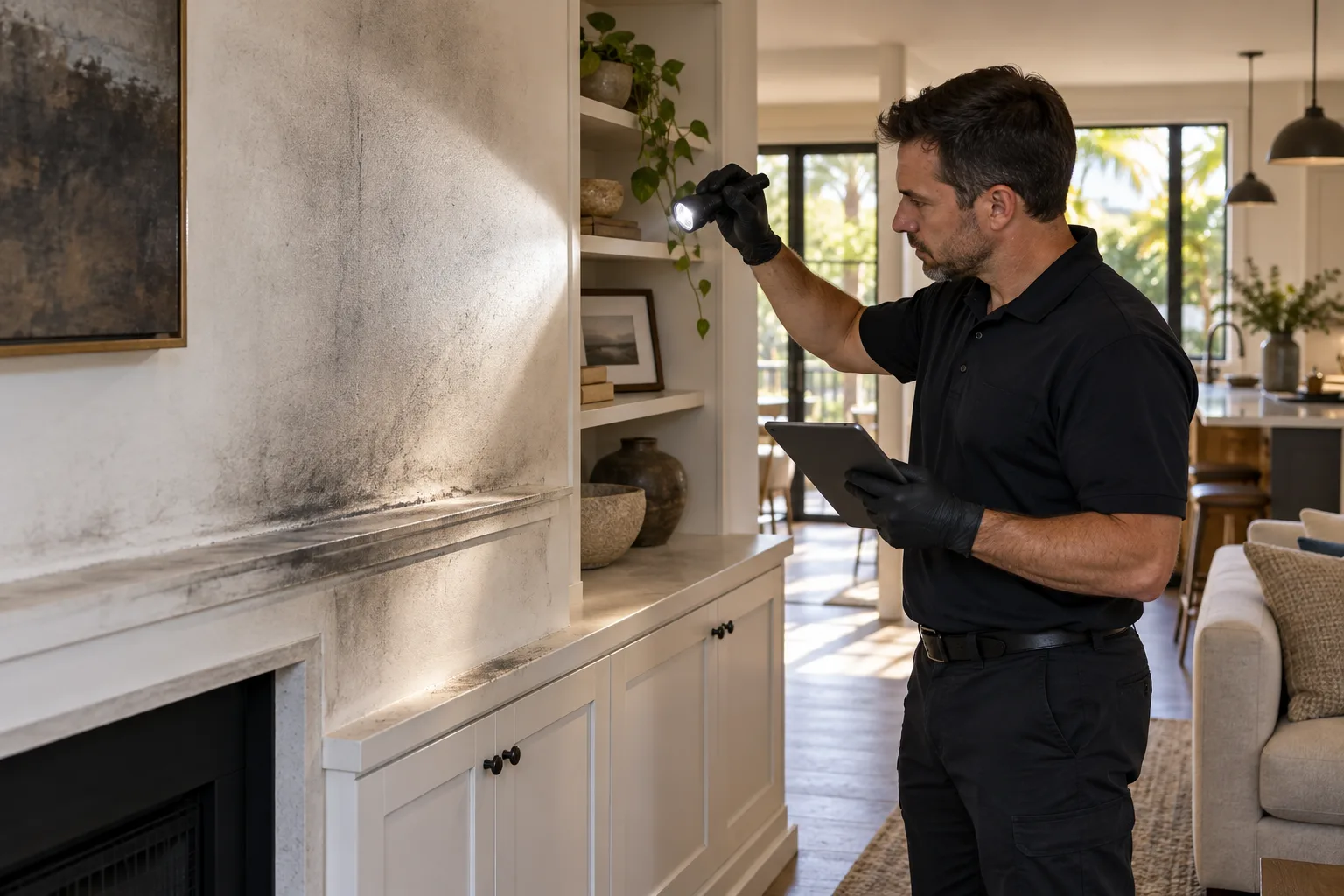
Smoke and soot can affect more than the room where a fire started. A hallway may show a light film, a cabinet finish may respond differently from painted drywall, and an upholstered item may need a different decision from either surface. The question is not simply whether a house can be cleaned. It is which areas and materials can be restored to an acceptable condition, which need specialist attention, and which need removal or repair.
That answer should come from a property-specific assessment. This guide explains how a restoration team can move from visible residue to a defensible cleaning, removal and repair scope without assuming that every dark mark needs the same treatment.
Wait for safe access before assessing residue
Do not enter a fire-damaged building until the fire department or other responsible authority says it is safe. The U.S. Fire Administration’s after-a-fire guidance advises people to follow local fire authorities on whether and when re-entry is allowed.
Once access is permitted, avoid starting broad wiping, repainting or disposal just to make the rooms look better. Early changes can obscure residue patterns, alter the condition of a finish, or remove information needed for the restoration and insurance records. If an area still has structural, electrical or utility restrictions, identify it as inaccessible rather than assuming it is unaffected.
Photograph representative conditions when it is safe. Record the room, surface and date, and keep a simple list of areas that have not yet been assessed. Documentation does not determine coverage or treatment, but it gives the contractor, property owner and insurer a clearer starting point.
Start with a room-by-room smoke and soot assessment
A useful assessment follows the building rather than one general statement such as “smoke damage throughout.” It begins with the room of origin, adjoining areas and plausible pathways, then records what is actually observed in each accessible space.
The assessor may use normal viewing, raking light across a surface, close visual examination, photographs and small controlled cleaning tests. These methods help reveal residue and show whether a finish changes when treated. The goal is to connect each proposed action to a location and material.
For every affected area, the record should answer:
| Assessment question | Why it matters |
|---|---|
| Where is residue visible or otherwise supported? | Establishes the boundary of proposed work |
| Which surface or material is affected? | Paint, sealed wood, unfinished material, fabric and metal can respond differently |
| Is there heat, water or physical damage too? | Cleaning alone may not address the full condition |
| What test or observation supports the method? | Keeps the scope tied to actual response instead of assumption |
| What result is expected? | Clarifies whether the goal is cleaning, odor reduction, repair preparation or replacement |
Two Eagles’ fire damage restoration service connects this assessment with contents decisions and repairs. A property can require several responses at once rather than one whole-house method.
Separate light residue from material damage
Visible soot does not automatically mean replacement, and a surface that looks clean does not automatically mean the fire had no effect. The material, finish, temperature exposure, residue load and response to testing all matter.
An intact, sealed surface with light residue may be a candidate for a controlled cleaning process. A porous material, damaged coating, deeply affected assembly or heat-deformed component may not return to an acceptable condition through surface cleaning. Materials opened for access or damaged by firefighting water also belong in the scope even when soot is not the main issue.
Ask the contractor to distinguish among these decisions:
- Assess further: the area is inaccessible, the material needs specialist review, or the condition is not yet clear.
- Test clean: a limited, documented test can show whether an appropriate method produces an acceptable result without damaging the finish.
- Clean: the material and condition support a defined treatment across the affected area.
- Remove: damage, contamination, loss of function or access needs make cleaning an unsuitable endpoint.
- Repair or replace: the recovery plan must restore the assembly or finish after removal or other damage.
This distinction makes the scope easier to review. It also prevents a cosmetic step, such as painting, from being used as a substitute for resolving the underlying condition.
Use test cleaning to guide the scope
A test area is not a promise that every similar-looking surface will respond the same way. It is a small, controlled way to evaluate a proposed method on a specific material and finish.
The record should identify where the test occurred, what material was tested, what changed and what remained. If a wall cleans acceptably but a nearby cabinet coating changes, the final scope should reflect that difference. If later access reveals a different condition, the scope can be revised with new documentation.
Avoid scrubbing an inconspicuous area with household products before the assessment. The wrong action can spread residue, drive it into texture, alter gloss or color, and make the original boundary harder to read. Ask what will be tested and how the result will be judged before work expands to the room.
Treat odor as a source question, not a masking step
Smoke odor should be traced to affected materials, contents and concealed areas rather than covered with fragrance. Surface residue, porous contents, damaged finishes and spaces behind removed materials can contribute to the condition.
A clear odor-control scope describes sequence. It may begin with removal of unsalvageable material and source cleaning, then address affected contents or specialist work, and finally evaluate whether additional treatment is justified. Rebuilding or repainting before that sequence is complete can make unresolved sources harder to reach.
Ask how the team will evaluate progress and what conditions would trigger a scope change. The objective is an understandable endpoint tied to the property, not a generic equipment list or a guaranteed result without inspection.
Include rooms beyond the fire area only when evidence supports it
Smoke can move through doorways, gaps and building air pathways, but that does not mean every room receives identical work. A closed room, an open hallway and a return-air area may have different conditions.
The scope should identify why a room is included. Useful support can include visible residue, repeatable inspection findings, affected contents or a documented relationship to the fire path. If no condition is found, record that assessment rather than adding cleaning by default.
For the HVAC system, note whether it was operating, whether residue is visible around registers or equipment, and whether a qualified specialist should evaluate it. The contractor should describe the basis and boundaries of any proposed HVAC work instead of treating duct cleaning as an automatic line item.
Keep contents decisions connected but separate
Furniture, clothing, electronics, artwork and other belongings can carry residue or odor while requiring very different handling from building surfaces. Some items may be assessed in place. Others may need inventory, specialist review, pack-out, cleaning, storage or a disposal decision.
Our guide to fire-damaged belongings and pack-out planning explains how to maintain identity, condition and custody records. Keep those records connected to the room assessment, but do not let an unclear building-cleaning line stand in for a contents plan.
Before discarding items related to an insurance claim, ask the insurer what documentation and review it requires. The California Department of Insurance residential property claims guide advises policyholders to document damage, prepare an inventory and not dispose of damaged property until the adjuster has examined it. Coverage remains an insurer decision under the policy.
Turn the assessment into a readable restoration scope
The final scope should let a homeowner connect the proposed work to rooms, materials and decisions. Review it alongside photographs and test notes, not only by total price.
Look for:
- affected rooms and boundaries;
- materials to be tested, cleaned, removed or repaired;
- contents and specialist responsibilities;
- areas still inaccessible or unresolved;
- the proposed sequence for residue, odor and reconstruction;
- exclusions and assumptions;
- a process for documenting changed conditions.
Our guide to reading a fire damage restoration estimate explains how to compare those details across contractor and insurer documents. If the scope changes after hidden conditions or test results become available, ask for the change in writing before the revised work proceeds.
Plan cleanup and repairs as one recovery sequence
Smoke and soot work is most useful when it leads into the full recovery plan. Cleaning, contents handling, selective removal and reconstruction should not become disconnected projects with gaps between them.
Two Eagles Restoration provides fire damage restoration in Los Angeles and can coordinate assessment through the repairs that follow. If your property is safe to access and you need help understanding affected rooms, surfaces and belongings, request a callback with the fire location, current access status and work already completed.
Common questions
Can soot be cleaned from walls after a house fire?
Sometimes, but the answer depends on the residue, wall finish, heat exposure and cleaning response. A sound assessment identifies the affected area and tests a suitable method before broad cleaning begins. Aggressive wiping can spread residue or damage a finish, so avoid treating every dark mark as an ordinary household-cleaning problem.
Why is there smoke damage in rooms where nothing burned?
Smoke and airborne residue can move beyond the room of origin through openings and air pathways before settling on surfaces and belongings. The pattern varies with the fire and the building. Rooms outside the burned area should be assessed based on observed conditions, not assumed clean or assigned the same treatment automatically.
Does every smoke-damaged material need to be replaced?
No. Some materials may respond to an appropriate cleaning process, while porous, heat-damaged, heavily affected or functionally compromised materials may need removal. The decision should connect the material, observed condition, test result and intended outcome. Replacement should not be assumed solely because residue is present.
Can smoke odor remain after visible soot is gone?
Yes. Visible residue and odor are related but not identical assessment questions. Odor may remain in materials, contents or areas that were not addressed by surface cleaning. A restoration scope should identify likely sources, the proposed treatment sequence and how the result will be evaluated before cosmetic repairs conceal unresolved conditions.
Should the HVAC system be inspected after a house fire?
Ask whether the system was operating during the fire, whether residue is visible near returns or supplies, and whether the assessment found a reason for qualified HVAC review. Do not assume that every system requires the same cleaning. Any proposed work should identify the observed basis, responsible specialist and parts included.
What should I document before smoke cleanup starts?
When entry is safe, photograph affected rooms and representative surfaces before conditions change. Keep an inventory of affected belongings, emergency-service records, estimates and written scope revisions. Ask the insurer before discarding property connected to a claim, and separate coverage decisions from the contractor's proposed cleaning or repair work.