
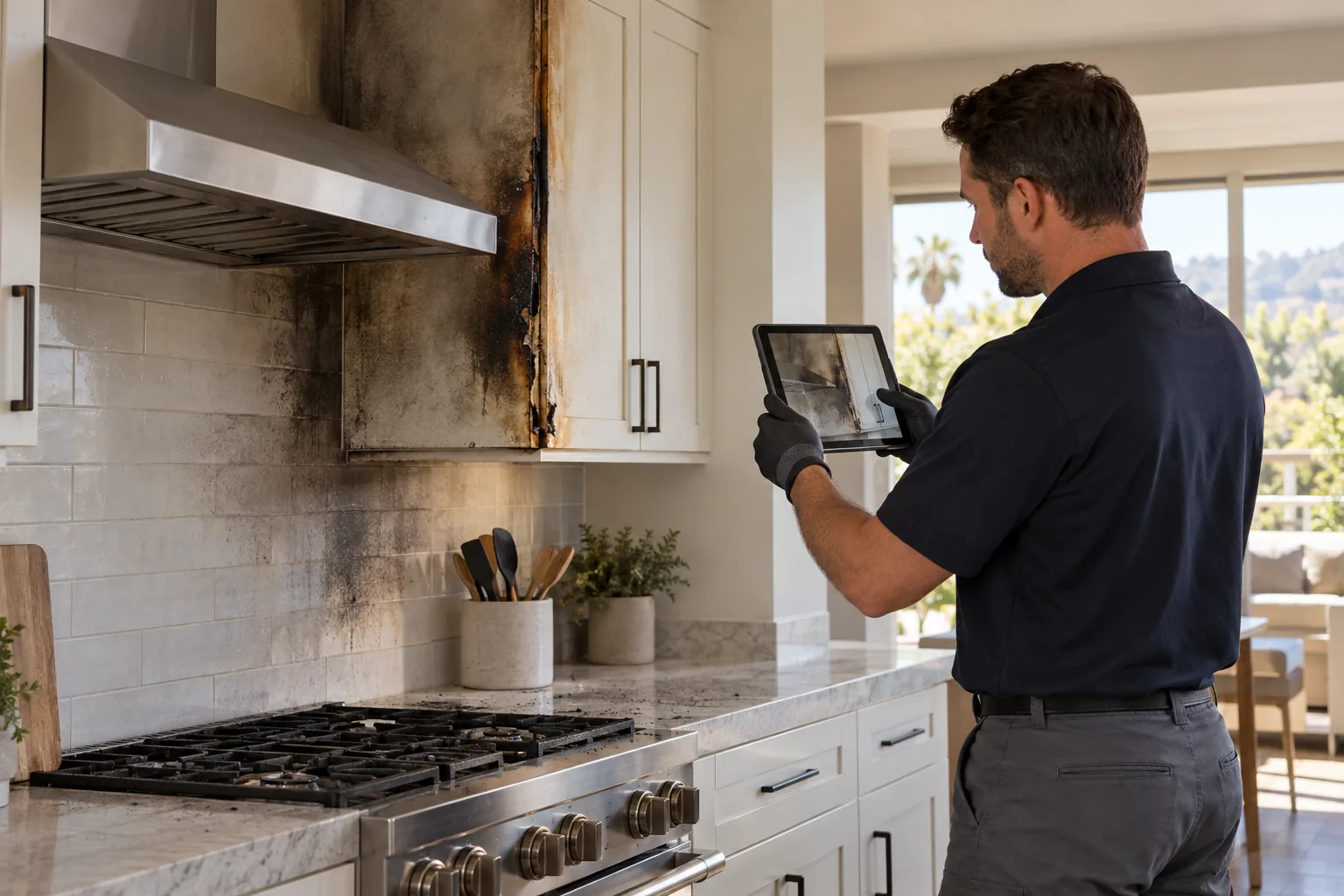
A fire damage estimate can be difficult to read because one loss may create several different kinds of work. Direct heat damage may be concentrated in one room, while smoke residue, odor, firefighting water, disturbed finishes and affected belongings extend the recovery plan beyond that room.
The estimate should help you connect proposed work to actual places and materials in the property. It should also help you see what is not included. This guide explains how to review that scope without assuming that every fire follows the same cleanup method, repair sequence or insurance outcome.
Begin with safety and access
An estimate is not the first priority after a fire. Stay out until local fire authorities say the property is safe to enter. The American Red Cross home-fire recovery guidance also advises people to wait for that clearance before re-entering a damaged home.
When inspection can begin, tell the restoration team about access restrictions, utilities, boarded openings, visible structural concerns and any areas that authorities or another specialist have restricted. A room that cannot be safely entered should be identified as unassessed rather than treated as if it has no damage.
Photograph conditions before extensive work changes them when it is safe to do so. Keep emergency-service records, temporary-repair receipts and contact information together. These records do not replace an inspection, but they can explain what happened before the estimator arrived.
Separate the scope of loss from the finished estimate
The terms can sound interchangeable, but they describe different levels of detail. The California Department of Insurance residential property claims guide explains that a scope of loss records the degree of damage, material or workmanship quality, and measurements needed to calculate quantities. A finished estimate turns that assessment into priced work.
That distinction matters when you receive an early document. A preliminary scope may identify affected rooms and measurements without resolving every price, finish or repair detail. Ask what stage the document represents:
- Initial inspection record: what was visible and accessible during the visit.
- Emergency or stabilization scope: immediate work intended to protect the property and limit further damage.
- Cleaning and removal scope: proposed treatment, testing, removal and disposal by area or material.
- Reconstruction estimate: repairs, materials and finish work after cleaning or removal.
- Contents scope: inventory, pack-out, cleaning, storage, specialist handling and return of belongings.
These may appear in one document or several coordinated documents. The important point is knowing which phase each one covers.
Review the fire estimate room by room
Start with the property, not the total at the bottom of the estimate. Walk through each accessible affected area and connect the document to what you can see. A room-by-room review makes omissions, duplicated work and unclear boundaries easier to discuss.
For each room or area, look for:
| Scope question | What the estimate should help explain |
|---|---|
| What was affected? | The surfaces, assemblies, fixtures or contents observed during assessment |
| What work is proposed? | Inspection, testing, cleaning, removal, protection, repair or replacement |
| How much work is included? | Measurements, quantities, counts or another understandable basis |
| What remains? | Finish selection, specialist review, access, permit or later repair decisions |
| What is excluded? | Work assigned to another phase, company, specialist or property decision-maker |
Do not assume a room is covered because its name appears once. A kitchen entry might describe wall cleaning but omit cabinetry, ceiling finishes or the transition to an adjoining room. Ask the estimator to explain how the affected boundaries were established and how adjoining materials will be handled.
Look for more than direct burn damage
The room of origin is only one part of a fire assessment. The scope may also need to address smoke and soot deposits, odor, water used during firefighting, openings made for access, and finishes disturbed while damaged materials are evaluated.
Each condition should connect to a proposed action. A broad line such as “clean house” does not explain which surfaces are included, what method is proposed or whether a test area will guide the work. Ask for enough detail to understand the location, material and intended result.
This does not mean every surface should be replaced. Some materials may be evaluated for cleaning, while others may require removal because of heat damage, contamination, loss of function or access needs. The appropriate decision depends on the actual material and condition. Two Eagles’ fire damage restoration service explains how assessment can connect structural materials, smoke residue, contents and repairs.
Keep building work and belongings organized separately
Cabinetry, drywall and flooring usually belong to the building scope. Furniture, clothing, electronics, artwork and other movable items may belong to a separate contents inventory or pack-out plan. The responsibilities can overlap when belongings block access to the building or need protection during work.
Confirm who is responsible for each step:
- documenting the item’s condition and location;
- deciding whether specialist evaluation is needed;
- packing, labeling and moving items;
- cleaning, storage and return;
- obtaining authorization before disposal.
Our guide to fire-damaged belongings and pack-out planning covers that process in more depth. Keeping it distinct from the building estimate helps prevent an unclear contents decision from disappearing inside a general room total.
Compare material quality, quantities and repair boundaries
Two estimates can name the same room but describe different work. Compare the underlying assumptions before comparing totals.
Check whether the document identifies the existing material or a proposed replacement. Look for measurements and counts that make sense for the room. Ask how matching, transitions and adjoining finishes are treated. If a repair requires access through an undamaged finish, the scope should explain the related removal and restoration rather than leaving the connection implicit.
Finish choices and upgrades also need a clear boundary. Damage-related repair, code-required work and owner-selected upgrades may be discussed separately. Do not assume an upgrade will be covered by insurance or that every existing finish can be matched exactly. Ask the contractor about the repair proposal and ask the insurer about coverage under your policy.
Compare claim documents without confusing responsibilities
An insurance adjuster’s estimate and a restoration contractor’s estimate may use similar line items, but they do not answer the same question. The insurer evaluates coverage and payment under the policy. The contractor describes the work proposed for the property.
Compare the documents by room, quantity, material and task. If they differ, identify the exact difference instead of asking whether the totals match. Examples include a room missing from one scope, different measurements, cleaning in one document and replacement in another, or a repair phase that has not yet been written.
The California Department of Insurance advises homeowners to keep a log of claim communications and copies of correspondence. Store photographs, estimates, revisions and written explanations together. Two Eagles can help with restoration estimating and insurance-loss documentation, but your insurer determines coverage and payment.
Expect documented changes when hidden conditions are found
The first inspection may not reveal conditions behind cabinets, wall finishes or other assemblies. Cleaning tests can also change the recommended approach. A responsible process does not pretend those uncertainties are already resolved.
When new conditions are found, ask for photographs or another clear record of the location, an explanation of the proposed response, and the effect on cost or sequence. Compare the change with the original scope so you can see what is new.
For residential work, the California Contractors State License Board’s contract guidance says changes to contract price or scope must be documented in a written change order signed before the changed work begins. Review the agreement that applies to your project and ask questions before signing. Coverage review by an insurer and authorization under a construction agreement remain separate decisions.
Use a short review checklist before authorizing work
You should be able to answer these questions after the estimate is explained:
- Which rooms, exterior areas and building components are included?
- Which conditions were visible, tested or still inaccessible?
- Which tasks belong to emergency service, cleaning, contents handling and reconstruction?
- Which quantities, materials and finish assumptions support the scope?
- Which specialist, permit or utility questions remain open?
- How will a new finding or requested change be documented?
- Who answers work-scope questions, and who answers insurance-coverage questions?
If the answers are unclear, ask for a marked-up walkthrough or written clarification. The goal is not to turn a homeowner into an estimator. It is to make the proposed recovery work understandable before decisions are made.
Connect the estimate to the full recovery plan
A useful estimate is more than a list of prices. It connects assessment, cleanup, contents decisions and repairs while showing where one phase ends and another begins. That connection becomes especially important when several teams or documents are involved.
Two Eagles Restoration handles fire damage restoration in Los Angeles and can connect mitigation and cleaning with the reconstruction that follows. If you need help understanding the damage and the next appropriate scope, request a callback with the property location, affected areas and work already completed.
Common questions
What should a fire damage restoration estimate include?
It should make the proposed work understandable by location and task. Look for affected rooms, materials, quantities, cleaning or removal steps, contents responsibilities, repair work and clear exclusions. The right detail depends on the property and damage. Ask the estimator to explain any line or area you cannot connect to the loss.
Why can a fire restoration estimate change after work begins?
Some conditions are hidden behind finishes or cannot be safely assessed during the first visit. Cleaning tests may also show that a surface needs a different treatment. Ask for new findings to be documented and for any change in scope, cost or schedule to be presented in writing before the changed work proceeds.
Is the insurance adjuster's estimate the same as the contractor's estimate?
Not necessarily. An adjuster evaluates the claim for the insurer, while a contractor describes proposed property work. The documents may use similar categories but serve different roles. Compare the rooms, quantities, materials and tasks, then direct coverage and payment questions to the insurer and work-scope questions to the contractor.
Should smoke damage outside the fire room appear in the estimate?
If assessment finds affected surfaces or contents outside the room of origin, the proposed scope should identify those areas and the recommended work. Smoke movement and material response vary by loss. Ask how each area was evaluated instead of assuming every room needs the same cleaning method or level of work.
Does a fire restoration estimate include damaged belongings?
Contents may be handled in a separate inventory, pack-out or treatment scope rather than the building estimate. Confirm who documents, moves, cleans, stores or returns belongings and which items need specialist review. Keep disposal and insurance decisions separate from the contractor's assessment of what work is practical.
What should I ask before authorizing fire restoration work?
Ask which areas and phases are included, what remains unassessed, who handles contents and specialist work, how changes will be documented, and which decisions are yours. Confirm the written agreement, payment schedule, permit responsibility when applicable, and the contact who will explain progress as conditions become clearer.