
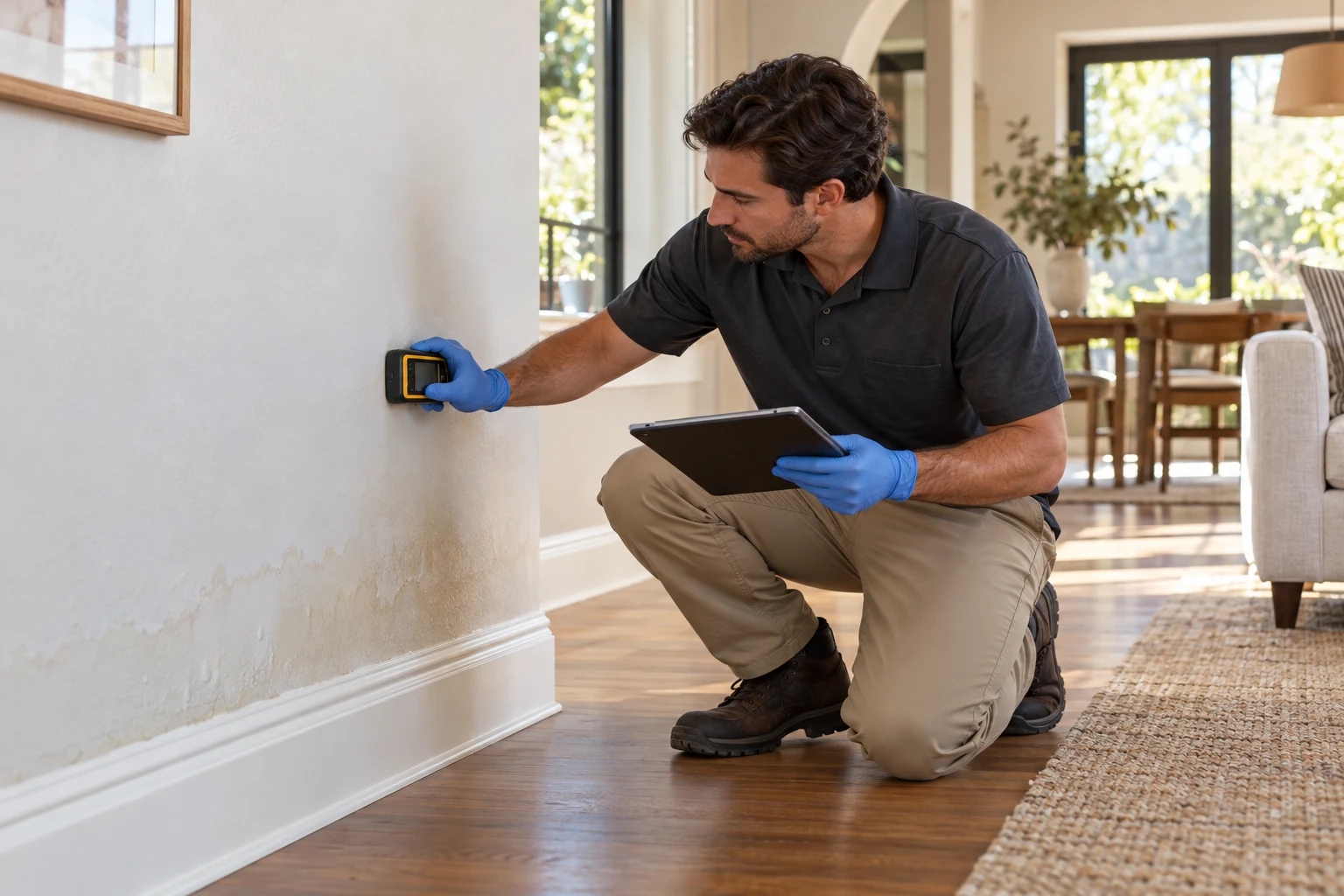
A water stain can make drywall look like a simple finish problem. The real decision sits behind the paint: did clean water reach an intact section that can be dried, or has the wallboard, insulation or cavity changed enough that selective removal is the safer and more reliable path?
There is no useful answer based only on the stain’s color or size. The water source, time, material condition, wall assembly and drying progress all matter. A professional assessment should connect those facts to a documented plan instead of treating every wet wall the same.
This guide explains the questions Los Angeles homeowners can ask when drywall is wet after a plumbing leak, appliance failure or other water loss. If water is still entering the property or electrical safety is uncertain, start with our first steps after water damage before focusing on finish repairs.
Start With the Water Source
The first question is not whether the wall can be patched. It is where the water came from and whether the source has been stopped.
Clean water from a recently failed supply line presents a different material decision from sewage, floodwater or water that has moved through a contaminated area. The EPA’s water-damage guidance says its dry-in-place table applies to clean-water damage. It directs people to use appropriate containment and personal protective equipment and consult experienced professionals when sewage or other pollutants may be involved.
The CDC’s disaster-cleanup guidance is more direct about contaminated materials: remove and discard drywall and insulation contaminated with sewage or floodwater. That boundary matters because drying a material and making a contaminated material suitable to remain are not the same question.
Tell the restoration team what you know about the source, when the loss was discovered and any work already completed. If the source is uncertain, record that uncertainty. Do not start a fan or open a wall simply to see whether the material improves before the water category and safety conditions are understood.
Time Matters, but 48 Hours Is Not a Verdict
Prompt drying reduces the opportunity for mold growth. The EPA recommends drying water-damaged areas and items within 24 to 48 hours, and its wallboard guidance addresses clean-water damage within that window.
That time range is a prevention guideline, not an automatic promise that every wall exposed for less than 48 hours can stay. It also does not mean every material becomes unsalvageable at a precise hour. The EPA notes that mold may occur inside the window and may not always occur immediately after it.
Ask for the known timeline and its limitations. A leak may have started before the stain was visible. Water can also move along framing, collect behind baseboards or affect insulation without announcing the full path on the painted face.
If the time of exposure is unknown, the plan should say so. An honest unknown is more useful than a confident clock based only on when someone first entered the room.
When Drywall May Be a Candidate to Dry in Place
The EPA says wallboard may be dried in place after clean-water damage when there is no obvious swelling and the seams remain intact. It also recommends ventilating the wall cavity when possible.
Those points create a starting screen, not a do-it-yourself approval. A team still needs to consider the specific wall assembly, access, insulation, coatings and adjacent materials. A painted surface can feel dry while the back of the wallboard or material inside the cavity remains wet.
Ask the assessor to explain:
- whether the drywall remains firm and dimensionally stable;
- whether seams, fasteners and paper facing appear intact;
- which areas were checked and which remain concealed;
- whether insulation or another absorbent material sits behind the wallboard;
- how the cavity can be addressed without causing a different safety problem;
- what measurements or observations will define acceptable progress.
Drying in place should mean retaining a material because its condition and the assembly support that plan. It should not mean waiting for the stain to look lighter.
Conditions That Can Shift the Plan Toward Removal
Drywall is a paper-faced gypsum product. Water can affect the facing, core, edges, seams and attachment points differently. Visible swelling, softness, crumbling, sagging, delamination or failed seams can indicate that the board no longer has the condition needed to remain as a finished surface.
Removal may also be needed to reach wet insulation, inspect a concealed cavity, address contamination or complete mold remediation. In some cases the drywall itself is only one part of the decision. The access created by a controlled cut can allow the team to answer what is happening behind it.
Confirmed or suspected mold changes the work plan. The CDC advises protective equipment for mold cleanup and notes that removing moldy drywall can create exposure. Our guide to mold remediation and the moisture source explains why cleanup and source correction need to remain connected.
Ask why a proposed removal boundary is where it is. A clear scope should connect the boundary to observed damage, contamination, access or repair needs. It should not rely on a generic height or room-wide assumption without explaining how that choice applies to the property.
Why a Dry-Looking Surface Is Not Enough
Paint can hide the back of the wallboard, the cavity and the contact between materials. A clean-looking wall does not establish that the assembly has dried, just as a visible stain does not by itself establish that the board must be removed.
Moisture assessment should identify locations and materials, not produce a single unexplained number. Ask what instrument or method was used, where observations were taken and what the team is comparing over time. Measurements should be interpreted in the context of the material and property rather than used as a universal pass-or-fail display.
Baseboards, cabinets and flooring can also affect access. If water reached the bottom edge of drywall behind a cabinet or built-in, the visible open wall may not represent the whole affected area. Ask whether those limits have been documented and what further access would answer.
Our guide to water-damage drying equipment explains how equipment and progress checks fit a property-specific drying plan. Equipment operation alone does not prove that concealed materials are ready to be closed or refinished.
Treat Ceilings as a Separate Safety Question
Wet ceiling drywall deserves extra caution because loss of strength or attachment can create a falling-material hazard. Do not stand beneath a bulging or sagging area, press on it or puncture it to release water.
Keep people and pets clear and report the condition when requesting help. Mention whether an active leak, light fixture or electrical component is nearby. If the ceiling appears unstable or electrical safety is uncertain, follow emergency guidance and wait for qualified direction rather than investigating from below.
The later salvage decision still considers source, time, contamination and physical condition. The immediate priority is preventing someone from entering an unsafe area.
Document Before Material Is Removed
Photograph the visible condition from a safe location and note when the damage was discovered. Record the apparent source if known, rooms affected and any emergency work completed. Do not delay necessary safety or mitigation work solely to build a perfect file.
If an insurance claim may be involved, ask the insurer what documentation it requires and how emergency work should be handled. Restoration documentation can describe conditions, measurements and scope, but it does not determine policy coverage or guarantee payment.
Before removal begins, ask for a written explanation of the proposed boundary and purpose. The record should distinguish material removed because it was damaged or contaminated from material opened to provide access. That distinction helps the later repair scope make sense.
Keep estimates, photographs, change authorizations and progress notes together. A dated record is easier to follow than a mixture of screenshots and verbal updates from different stages.
Separate Drying From Reconstruction
Drying and wall repair are connected, but they are not interchangeable. A mitigation scope may address water, access and affected materials. A reconstruction scope may address replacement drywall, fastening, finishing, texture, trim and paint.
Ask what condition must be established before the wall is closed. If insulation, framing or another concealed material was affected, identify who confirms the next stage can begin. Finishing too early can hide an unresolved condition; leaving the handoff undefined can create a long gap after drying work ends.
Two Eagles Restoration handles water mitigation and reconstruction. Our mitigation-to-reconstruction guide outlines the questions that help connect assessment, removal, drying and repairs in one recovery plan.
If different contractors are involved, request a clear handoff. The person installing drywall should know the approved repair boundary, and the property owner should know which exclusions or open questions remain.
Questions to Ask About the Drywall Decision
Use the assessment to get property-specific answers. Useful questions include:
- What is the known or suspected water source?
- Is the water considered clean, or are contamination precautions needed?
- When was the wall likely affected, and how certain is that timeline?
- Is the drywall swollen, soft, sagging, crumbling or separating at seams?
- What was assessed behind the visible surface?
- Is insulation or another absorbent material affected?
- If drying in place is proposed, how will progress and completion be checked?
- If removal is proposed, what condition or access need defines the boundary?
- Who handles the reconstruction, and what must happen before closing the wall?
A good explanation should connect the recommendation to the observed property. It should also state what remains unknown and how the next step will answer it.
Build a Plan From the Wall Assembly, Not the Stain
Water-damaged drywall is not automatically saved or automatically discarded. Clean-water exposure, prompt response, intact materials and a verifiable drying plan may support drying in place. Swelling, failed seams, contamination, mold, concealed wet insulation or unsafe access can support selective removal and replacement.
The decision belongs in a broader recovery plan that starts with the source and ends with a documented handoff to repairs. That approach protects useful materials when they can responsibly remain without asking paint or appearance to prove what is happening inside a wall.
If you need help assessing water-damaged drywall in a Los Angeles property, contact our water damage restoration team. Tell us where the water appeared, when it was discovered and what work has already been completed so we can discuss the appropriate next step.
Common questions
Can water-damaged drywall dry without being removed?
Sometimes. Clean-water exposure addressed promptly may allow intact wallboard to dry in place when it has not swollen and its seams remain sound. The water source, affected assembly, concealed materials and measured progress still need to be assessed before that decision is made.
Does a water stain mean drywall must be replaced?
A stain alone does not establish the condition of the gypsum core, paper facing, fasteners, insulation or wall cavity. Ask what the assessment found, whether the material remains firm and intact, and how the team will confirm that the affected assembly is dry.
What drywall changes can point toward removal?
Visible swelling, softness, crumbling, sagging, failed seams, damaged paper facing, contamination or confirmed mold can change the plan. Concealed wet insulation or an inaccessible cavity may also require selective access even when the painted surface looks better.
Can I paint over a dried water stain?
Do not use paint as proof that the moisture problem is resolved. First stop the source, establish the condition of the drywall and connected materials, complete any required cleaning or removal, and confirm the repair sequence before refinishing the surface.
Should wet drywall be removed after sewage or floodwater exposure?
Contaminated water changes the safety and material decision. CDC guidance says drywall and insulation contaminated with sewage or floodwater should be removed and discarded. Keep clear of the affected area and seek an appropriately scoped professional assessment.
Who repairs the wall after damaged drywall is removed?
Clarify this in the written scope. Mitigation may include assessment, controlled removal and drying, while reconstruction covers replacement drywall, finishing, texture and paint. A coordinated plan should identify who handles each stage and what must be confirmed before the wall is closed.