
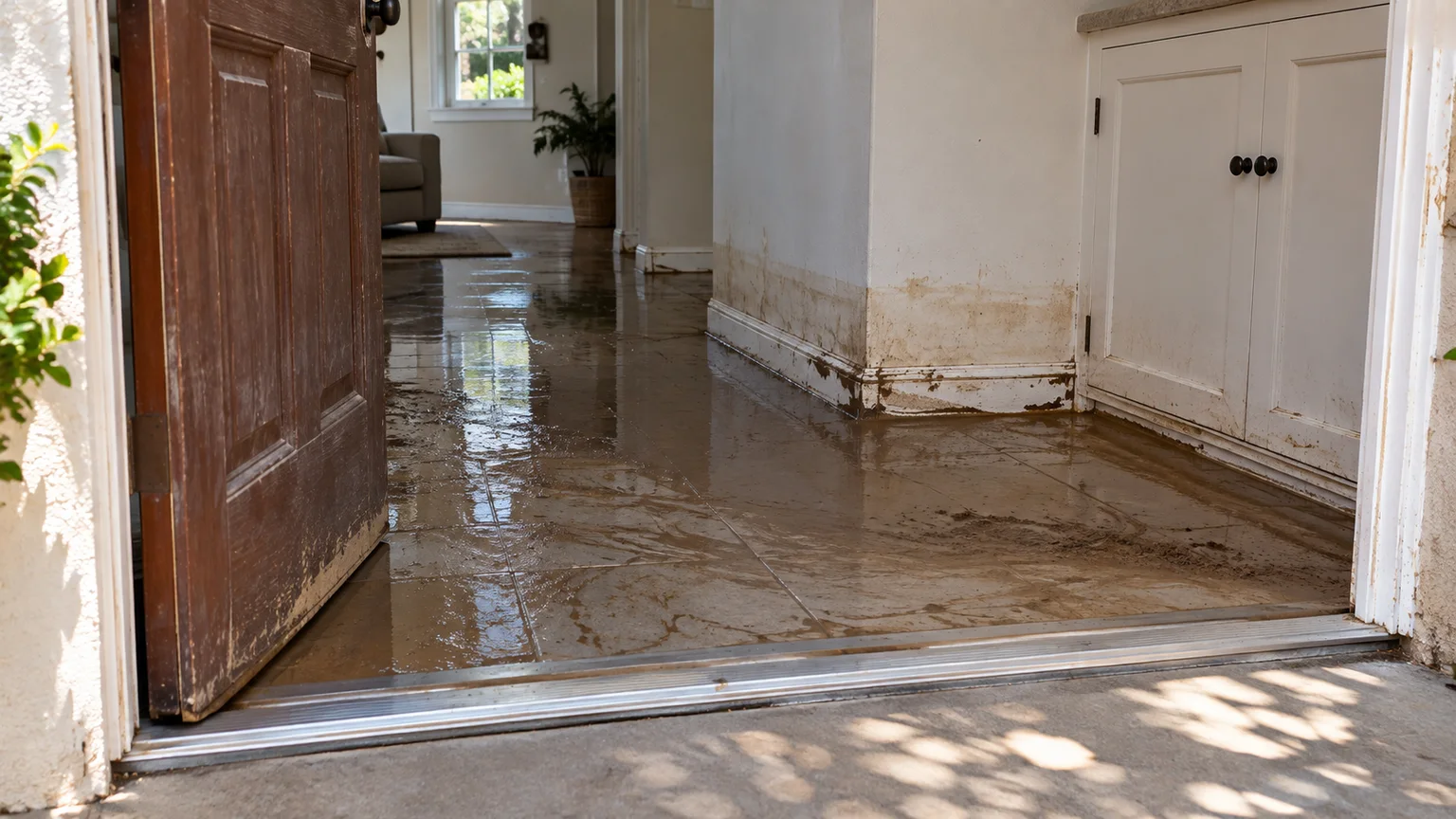
Outdoor floodwater entering a home brings a different set of decisions from a small indoor leak. Water can move through rooms and belongings while carrying material from outside. After the water recedes, its path helps determine what needs assessment, removal, cleaning and drying.
Use this guide to prepare for safe access and a cleanup handoff. For broader first steps after water damage, see our guide to safety and documentation. Your first job is to protect people and identify who can assess the property, not to make every material decision immediately.
Treat the water as potentially contaminated
Floodwater may carry sewage microorganisms and chemicals into a home, according to the EPA flood cleanup guide. Appearance alone cannot tell you what the water carried. Note whether it entered from a street, yard or another outdoor area and share what you observed with the people assessing the property.
Keep household members away from affected areas while access and cleanup are being arranged. Identify rooms, contents and systems the water may have reached, but do not enter a hazardous area simply to complete a list.
Wait for safe access
Wait until professionals say it is safe to reenter a flood-damaged home, since structural and electrical hazards may remain. The EPA flooded home guide explains this first step. Follow any local access restrictions as well, and ask which parts of the property remain off limits.
If reaching the main power switch requires entering standing water, call an electrician to turn the power off. Have an electrician check the electrical system before turning power back on. These are separate steps in CDC’s reentry guidance; do not enter standing water to operate the switch.
Limit exposure during cleanup
Children, pregnant people, people with asthma and people with weakened immune systems should not participate in flood cleanup, according to the EPA. Plan for household members to remain away from the work area and arrange another point of contact if necessary.
For someone entering once it is safe, EPA’s flooded home guide recommends protective clothing and, at a minimum, an N95 respirator, goggles without holes, gloves and clothing covering exposed skin. It also recommends boots or waders when standing water is present. Protective equipment does not replace clearance to enter or make electrical and structural hazards safe.
Record the water path before work changes it
Once it is safe, photograph affected rooms and belongings before cleanup and contact your insurer about documentation. The EPA flooded home guide places those steps before cleanup. Do not enter a restricted area or handle an unsafe object for a photograph.
Make a room-by-room list of visible water lines, affected belongings and areas you could not inspect. Record what you know about when and where the water entered, and distinguish observations from uncertainty. Share the list and photographs with the cleanup team. Ask your insurer directly about its documentation requirements and any claim questions.
Discuss materials and cleaning choices
Drywall and insulation contaminated with sewage or floodwater should be removed and discarded, according to CDC cleanup guidance. Ask the team to show you the affected areas and explain what it proposes to remove, what remains unassessed and how belongings will be handled. Do not assume a dry-looking surface resolves contamination within a material.
Before using disinfectant, clean the surface thoroughly with clean water and detergent. The EPA also says disinfectants need to remain on the surface for the contact time on the label. These steps are relevant to cleaning choices, but they do not make every flood-affected material suitable for cleaning. Ask the professionals which surfaces and contents they propose to clean or remove and why.
Never mix cleaning products or add bleach to other chemicals: mixing can create toxic vapors, the EPA warns. Keep product labels available to the people doing the work and follow their instructions.
Plan drying and the repair handoff
Do not use an HVAC system affected by floodwater to dry the home; the EPA recommends professional cleaning and drying of the affected system. Tell the assessment team if water reached equipment or ducts, and ask who will assess that system and when it can be used.
Do not close flooded wall cavities or apply paint or sealants to wet surfaces until the materials are dry inside, according to the EPA. Ask how the team will document drying progress and communicate readiness for repairs. A finished-looking surface is not a substitute for understanding the condition behind it.
Drying after flooding may take several days to weeks, the EPA notes. Ask for updates as the work progresses rather than treating a projected date as a guarantee.
Prepare for a professional assessment
When you contact a restoration team, share the water source as you understand it, the affected rooms, access restrictions, electrical concerns and photographs taken safely. Ask the team to explain its proposed scope, which materials need further assessment, how contents will be handled and how changes will be documented. Identify a contact for questions and request a clear handoff between cleanup, drying and repair.
Two Eagles Restoration provides water damage restoration, drying and reconstruction services in Los Angeles. Contact the team to discuss the property and the work that may be needed. The assessment and proposed scope should reflect the conditions found at your home.
Common questions
Is outdoor floodwater in my home contaminated?
Floodwater can carry sewage microorganisms and chemicals. Do not assume it is safe because it looks clear. Describe where the water came from and what it touched when arranging an assessment.
Can I enter to photograph the damage?
Wait until professionals say it is safe to reenter. If access is restricted, document what you can from a safe location and tell your insurer and restoration team what you could not photograph.
Can flood-affected drywall stay in place if it looks dry?
CDC advises removing and discarding drywall and insulation contaminated with sewage or floodwater. Ask the cleanup team to explain the affected areas and proposed removal before repair decisions.
Can I use my heating or air conditioning to dry the house?
EPA says not to use an HVAC system affected by floodwater to dry the home. Discuss professional cleaning and drying of the system before using it.
How long will drying take?
EPA says drying after flooding can take several days to weeks. The actual scope and progress depend on the affected property and materials; ask the team how progress will be documented.