
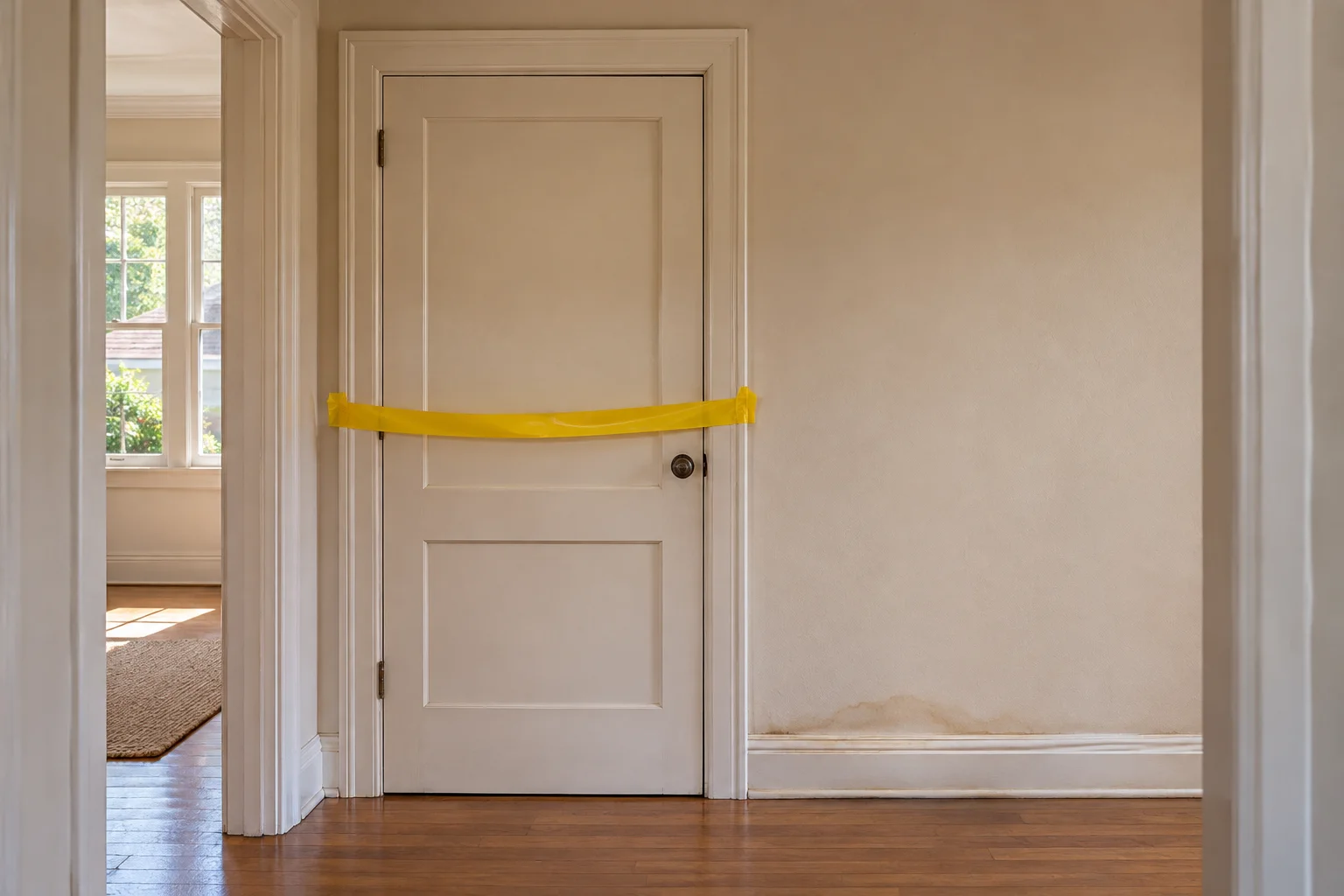
After a leak, a restoration plan may call for opening a wall, lifting flooring or accessing a pipe. If a material in that path could contain asbestos, pause the proposed disturbance and arrange a qualified assessment before the work proceeds. A water stain is a reason to investigate moisture; it does not identify what is in the surrounding material.
When to pause the work
The EPA says appearance alone generally cannot identify asbestos-containing material unless it is labeled. EPA: Protect Your Family from Exposures to Asbestos The EPA explains that cutting, sanding, scraping or drilling asbestos-containing material can release fibers. EPA guidance
The EPA recommends minimizing activity and access around damaged material suspected of containing asbestos. EPA guidance The EPA advises against sweeping or vacuuming debris that may contain asbestos. EPA guidance Do not touch or clean up suspect material, collect a sample, or enter a restricted space for photographs or records. Tell the restoration coordinator exactly which opening, removal or other disturbance is planned and where it would occur. Ask how the water problem can be assessed without disturbing the suspect material while the specialist is arranged.
What might be affected?
The EPA lists some vinyl flooring, backing and adhesives, pipe coverings, and textured wall or ceiling finishes among materials that can contain asbestos. EPA: Learn About Asbestos These are examples, not a diagnosis. A construction date alone cannot confirm or exclude asbestos. Share existing plans, prior reports, renovation records and photos already available from a safe location; do not seek them inside a restricted area. Explain the leak location, the proposed work and any inaccessible areas.
Choose the right specialists
The EPA advises having a trained, accredited asbestos professional collect samples because incorrect sampling can create added risk. EPA: Protect Your Family from Exposures to Asbestos The EPA recommends separate firms for evaluating asbestos-related needs and performing any necessary repair or removal. EPA guidance Ask who will assess the materials and who would perform any abatement if needed.
Cal/OSHA maintains a consultant registry and advises checking the consultant’s state photo ID and refresher training certificates. Cal/OSHA: Asbestos Consultants and Site Surveillance Technicians California maintains a separate public lookup for registered asbestos contractors and employers. Cal/OSHA: Asbestos Contractor Registration Ask the assessor and contractor which credentials, licenses and registrations apply to this particular work, then verify current status with the relevant agency. The assessment role and the contractor role are separate questions; a listing alone does not determine the requirements for every project.
Agree on the assessment
The EPA recommends confirming that the inspector will visually examine affected material and arrange laboratory analysis of samples. EPA: Protect Your Family from Exposures to Asbestos Before the visit, ask which rooms, layers and materials are included, which areas cannot be assessed, who will collect any samples, and what written results and follow-up you will receive. Tell the assessor if the proposed restoration scope changes; an assessment of one material or room does not automatically resolve an unexamined area.
Document the handoff
If asbestos is confirmed, the EPA advises obtaining a written evaluation identifying its location, damage and recommended corrections. EPA: Protect Your Family from Exposures to Asbestos Ask the assessor to identify any limits and the next step for each proposed disturbance. If more evaluation, abatement or clearance is needed, have the qualified outside specialists explain their respective responsibilities and provide the appropriate documentation.
South Coast AQMD publishes Rule 1403 guidance addressing surveys, notifications and work practices for covered renovation and demolition activity. South Coast AQMD: Asbestos Demolition & Removal Ask the qualified parties and South Coast AQMD which requirements apply to the specific property and scope before work changes; do not assume a filing or exception applies from a general description.
| Material or location | Paused work | Assessor | Written disposition | Next owner |
|---|---|---|---|---|
| Identify the exact room and layer | Record the proposed cut, removal or access | Name the qualified professional | Record findings, exclusions and follow-up | Name who acts and when |
Use a separate row for each affected material or location. Share the written disposition with the restoration coordinator before revising the work plan, and retain the unresolved rows until their owners and next steps are clear. For the broader repair sequence, see mitigation to reconstruction. Two Eagles describes restoration and coordination of asbestos abatement through qualified subcontractors on its reconstruction service page; testing, sampling, any clearance and abatement belong with qualified outside specialists.
Common questions
Can a material's appearance or the home's age rule out asbestos?
Neither appearance nor a construction date confirms or excludes asbestos. Pause proposed disturbance and ask a qualified asbestos professional to assess the specific materials and work area.
Should I collect a sample myself?
No. Leave suspected material alone and arrange assessment by a trained, accredited asbestos professional. Do not enter a restricted area to take photographs or retrieve records.
Who decides what happens before restoration resumes?
Ask the qualified assessor and any needed abatement contractor for their written findings and next steps. The restoration coordinator can use those documents to update the scope and identify the next owner.